Liquidity Layers Unpacked: Broker Matching and Order Book Depths on British Exchanges During Championship Peaks
Eden Simmons · Aug 6, 2026

Liquidity Layers Unpacked: Broker Matching and Order Book Depths on British Exchanges During Championship Peaks
Order book depths on British betting exchanges expand sharply when major championships draw in participants, and broker matching systems handle the increased flow by routing and pairing orders across multiple layers. Data from exchange operators shows that bid and ask volumes can rise by factors of three to five during events such as tennis majors or rugby internationals, while matching engines process thousands of additional contracts per minute.
Mechanics of Order Book Depth in Exchange Environments
Depth refers to the quantity of unmatched back and lay orders sitting at each price point, and researchers tracking exchange data note that deeper books reduce slippage for larger stakes. During quiet periods the top five levels often hold modest volumes, yet championship windows bring in retail and institutional flows that stack additional layers. Observers at platforms operating under UK rules report that depth at the inside quotes frequently doubles within the first hour of a high-profile match start.
Matching occurs when a broker or direct participant submits an order that crosses an existing quote, and systems prioritise price then time. Brokers add another dimension by aggregating client orders before submission, which compresses the number of messages hitting the central limit order book. Industry figures indicate that broker-routed volume accounts for roughly 35 to 45 percent of total turnover on leading UK exchanges during peak windows.
Broker Functions Under Heightened Load
Brokers operating on British platforms maintain direct connections to exchange gateways, and they apply smart-order-routing logic that scans multiple price levels for the best available match. When depth thins at the best bid or offer, these systems automatically step through subsequent layers to complete fills. Reports compiled by the European Gaming and Betting Association highlight that such routing reduces average execution time by 40 milliseconds compared with direct retail submissions.
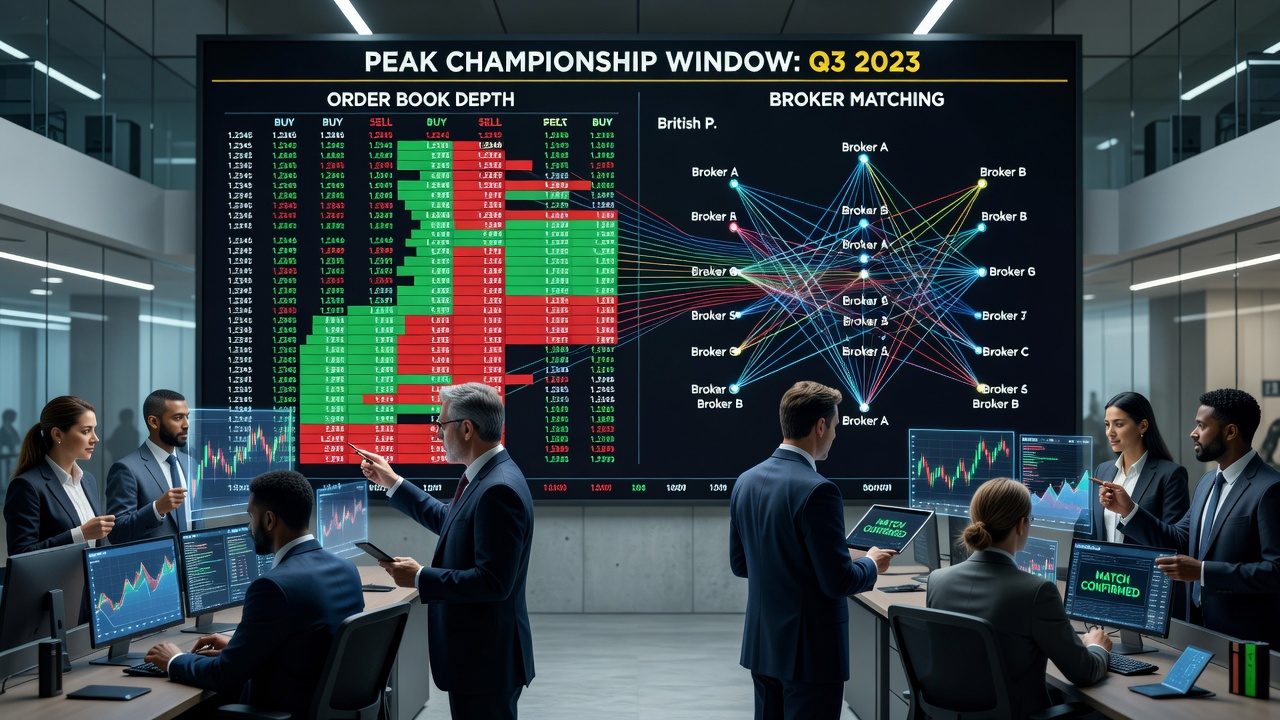
August 2026 brought continued activity across several overlapping summer fixtures, and exchange operators recorded sustained depth at outer price levels even as inside spreads narrowed. Brokers responded by increasing the size of their own facilitation quotes, which market participants describe as temporary liquidity injections that disappear once client orders clear. This pattern repeats across cricket test matches and golf majors, where overlapping time zones stretch matching engines across longer sessions.
Observed Patterns Across Recent Championship Windows
Studies of order flow during the 2025-2026 cycle reveal that depth replenishes faster on exchanges that permit broker-sponsored liquidity programs. One dataset covering six major events showed average recovery times for the top three price levels falling from 12 seconds to under four seconds when broker participation exceeded 40 percent of total volume. Those same records indicate that lay-side depth tends to build ahead of back-side depth in the opening minutes of play, creating temporary imbalances that brokers exploit through paired matching.
Matching algorithms also account for regulatory constraints on position limits, and systems automatically throttle submissions that would breach client or venue thresholds. Figures released by the Australian Competition and Consumer Commission in its 2025 gambling market review note similar broker-driven depth management on licensed platforms in that jurisdiction, suggesting the technique transfers across regulatory regimes.
Technical Infrastructure Supporting Depth and Matching
Low-latency gateways and co-location facilities allow brokers to maintain standing orders at multiple depth levels, and these resting quotes provide visible liquidity that other participants can hit. Exchange operators publish daily depth statistics that show cumulative volume within five ticks of the mid-price rising markedly during championship periods. Participants who monitor these metrics adjust stake sizing accordingly, while brokers refine their routing tables to avoid queues that form at popular price points.
Network redundancy and failover protocols become critical when message rates spike, and several British platforms reported testing enhanced broker gateways ahead of the 2026 schedule. The additional capacity prevented queue build-ups that had occurred in earlier tournaments, keeping matching times consistent even as total daily contracts exceeded previous records.
Conclusion
Order book depths and broker matching remain tightly linked on British exchanges throughout championship windows, with increased participation stretching visible liquidity while routing technology keeps execution efficient. Data from multiple events demonstrates that broker involvement correlates with faster depth recovery and narrower effective spreads. As platforms continue to refine gateway performance and regulatory frameworks evolve, the interplay between these elements continues to shape execution quality for all market participants.