Algorithmic Precision in Niche Sports: How Matching Systems Shape Forecast Reliability on Prediction Platforms
Morgan Wagner · Aug 22, 2026

Algorithmic Precision in Niche Sports: How Matching Systems Shape Forecast Reliability on Prediction Platforms
Prediction platforms have expanded their reach into niche sports such as handball, table tennis circuits, and regional volleyball leagues, where matching algorithms determine how forecasts align with available data points. These systems operate by pairing user predictions with historical performance metrics, real-time statistics, and probability models that adjust continuously during events. In August 2026, several platforms reported increased participation in these specialized markets, driven by refined algorithms that reduce latency between data input and forecast output.
Core Components of Matching Algorithms
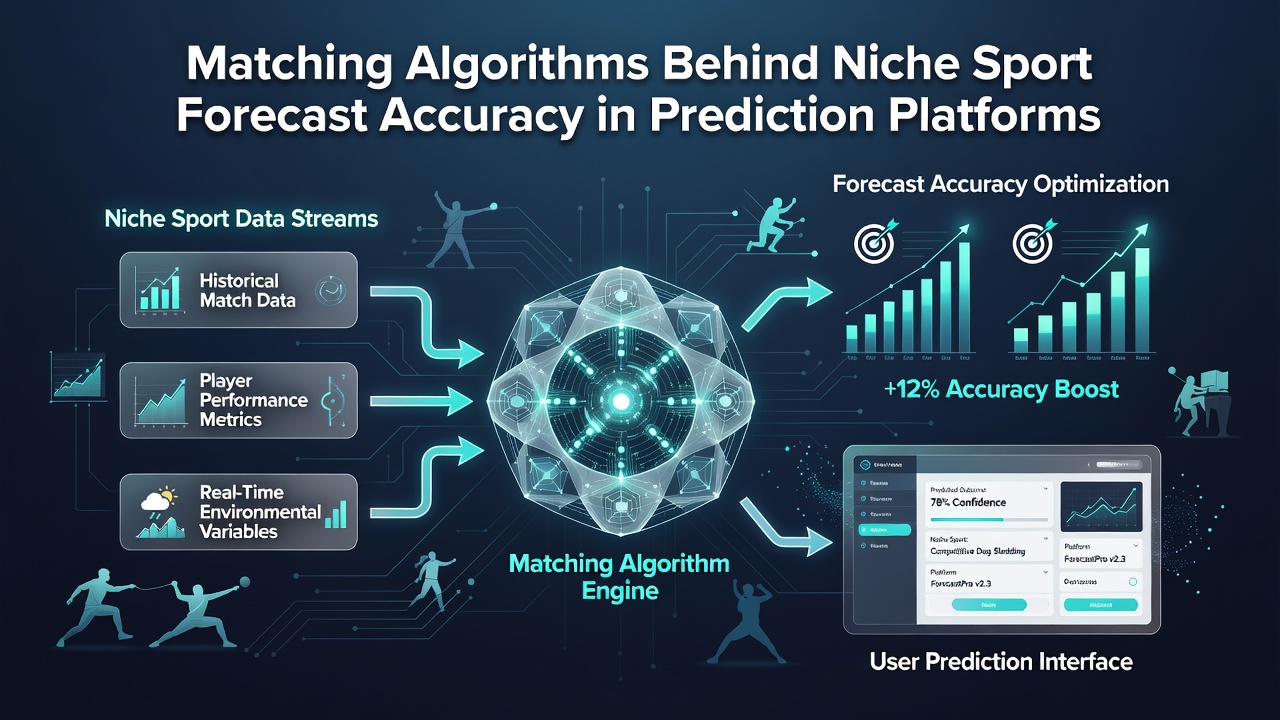
Matching algorithms rely on graph-based structures and optimization techniques to connect prediction inputs with outcome probabilities. Researchers at institutions studying computational sports analytics have documented how bipartite matching models assign weights to variables including player fatigue indicators, venue-specific conditions, and head-to-head records. The process begins with data ingestion from multiple sensors and feeds, then proceeds through clustering methods that group similar historical scenarios before generating adjusted probabilities.
Those who analyze these platforms note that niche sports present unique challenges because liquidity remains lower than in major leagues. Algorithms compensate by incorporating cross-sport correlations and secondary data sources such as training load reports or travel schedules. This approach allows forecasts to stabilize even when direct event data appears sparse.
Data Integration and Real-Time Adjustments
Effective matching requires seamless integration of structured and unstructured data. Platforms pull information from official league databases, wearable device outputs, and weather services, then feed it into machine learning layers that update probabilities every few seconds. Studies from European research consortia have shown that incorporating multi-source validation reduces forecast variance by measurable margins in events like European handball championships.
Observers tracking platform performance during summer 2026 tournaments observed that algorithms using ensemble methods outperformed single-model approaches in accuracy metrics for table tennis and badminton circuits. These methods combine decision trees with neural network outputs, allowing the system to recalibrate when unexpected variables such as last-minute lineup changes emerge.
Challenges Specific to Niche Sports Markets
Niche sports often feature irregular schedules and smaller sample sizes, which can limit the training data available to algorithms. Developers address this constraint through transfer learning techniques that borrow patterns from related disciplines, such as applying volleyball spike statistics to predict outcomes in beach volleyball variants. Data from industry reports compiled by organizations including the European Gaming and Betting Association indicate that platforms employing these techniques maintained consistent forecast reliability across fragmented regional competitions.
Another complication arises from variable event durations and scoring systems. Algorithms must normalize these differences before matching occurs, often through custom feature engineering that converts raw scores into comparable probability distributions. Analysts examining platform logs have found that such normalization steps contribute directly to improved alignment between user forecasts and actual results in lower-profile tournaments.
Performance Metrics and Validation Methods
Platforms evaluate algorithm effectiveness using metrics such as Brier scores and logarithmic loss functions applied to historical prediction sets. Academic papers published in sports informatics journals describe how backtesting frameworks simulate thousands of niche sport events to measure calibration accuracy over time. In practice, these evaluations guide iterative refinements that adjust weighting parameters when systematic biases appear in particular sports.
Regulatory bodies in regions including Australia and Canada have examined the transparency of these validation processes as part of broader oversight of digital prediction services. Reports from these agencies highlight the importance of documented audit trails that trace how matching decisions evolve during live events.
Future Directions in Algorithm Development
Emerging techniques incorporate reinforcement learning elements that allow algorithms to adapt based on ongoing forecast performance without manual intervention. Developers testing these systems on niche sports datasets report faster convergence toward stable probability estimates compared with static models. Collaboration between platform operators and university research teams continues to explore hybrid architectures that blend symbolic reasoning with deep learning components.
Conclusion
Matching algorithms form the operational backbone of forecast accuracy on prediction platforms focused on niche sports. Through continuous data integration, adaptive modeling, and rigorous validation, these systems address the inherent constraints of smaller markets while supporting consistent performance across diverse athletic disciplines. As participation grows, further refinements in algorithmic design will likely shape how platforms deliver reliable predictions to users worldwide.