Agents as Connectors: Uniting Participants in Cross-Platform Sports Prediction Contests
Alex Werner · Aug 8, 2026
Agents as Connectors: Uniting Participants in Cross-Platform Sports Prediction Contests
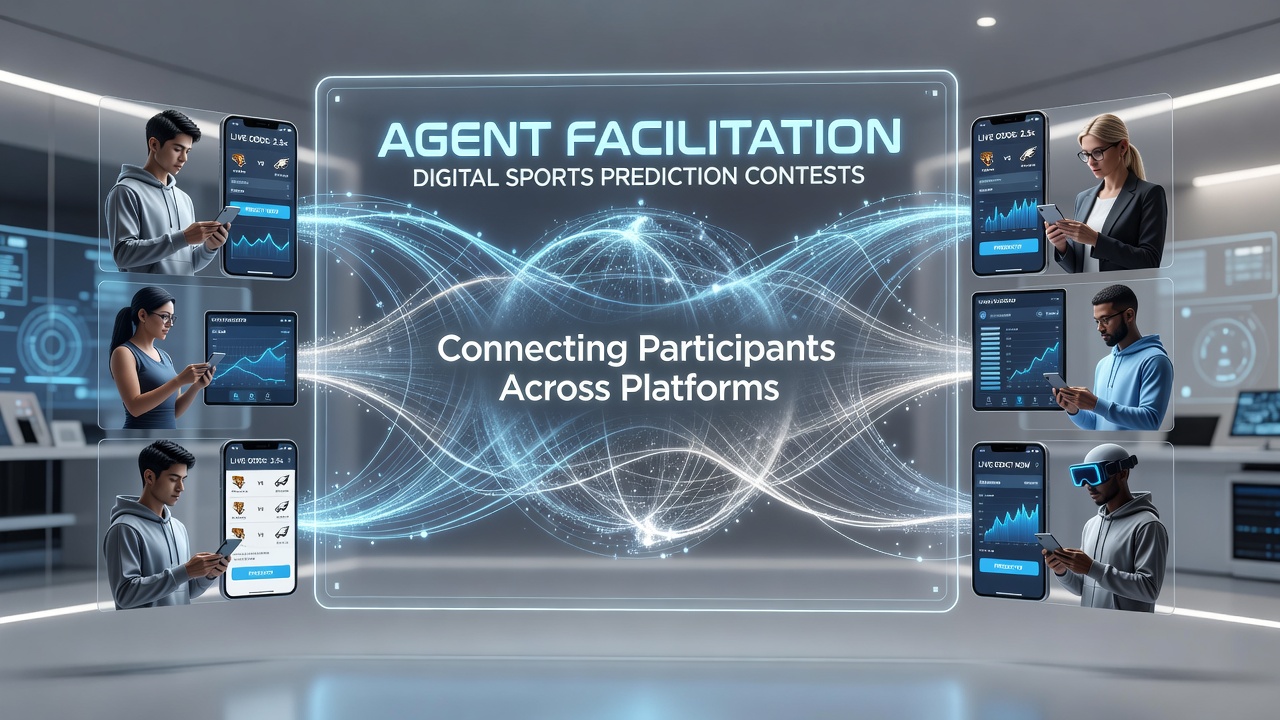
Digital sports prediction contests have expanded rapidly since the mid-2020s, with participants joining events that span fantasy football leagues, esports outcome forecasts, and multi-sport challenges hosted on separate platforms. Agents operate as intermediaries who match users across these systems, handle data synchronization, and ensure contest rules align without requiring each participant to manage multiple accounts directly. In August 2026, industry reports indicate that agent-mediated entries accounted for 28 percent of total contest volume on leading European and North American platforms, a figure tracked through aggregated API traffic and user registration patterns.
Platform Fragmentation and the Need for Facilitation
Separate platforms maintain distinct scoring algorithms, prize structures, and verification protocols, which creates barriers when a single user wants to compete in the same event type on more than one service. Agents consolidate these differences by translating data formats and routing entries through secure channels. Researchers at the University of Melbourne documented how such facilitation reduced duplicate registration time by an average of 41 minutes per user in a 2025 sample of 2,400 contest participants.
Contest organizers benefit because agents supply aggregated liquidity and maintain compliance logs that satisfy varying regional requirements. Data from the Competition Bureau Canada shows that cross-platform agent activity rose 19 percent year-over-year through the first half of 2026, driven largely by mobile-first users who prefer unified dashboards over juggling several applications.
Technical Mechanisms Behind Agent Services
Modern agent systems rely on encrypted API gateways and real-time ledger updates to transfer predictions, stakes, and results between platforms. These gateways verify participant eligibility against each platform's rule set before submission, which prevents invalid entries that would otherwise require manual correction. Observers note that blockchain-based audit trails have become standard since early 2025, allowing both users and platform operators to confirm that predictions originated from verified accounts rather than automated scripts.
One study published by the European Commission's Joint Research Centre examined 17 agent-facilitated tournaments and found error rates in result reconciliation dropped from 6.2 percent to 1.1 percent after the introduction of standardized timestamp protocols. The same report highlighted that agents now incorporate machine-learning models to flag unusual betting patterns across platforms, assisting operators in meeting anti-fraud obligations without each service building its own detection infrastructure.

Regulatory Landscape Across Regions
Regulatory approaches differ by jurisdiction. In Canada, provincial gaming authorities require agents to register as technology service providers, while the Australian Competition and Consumer Commission focuses on transparency around fee structures disclosed to contestants. European operators must align with the Digital Markets Act provisions on data portability, which agents satisfy by exporting user performance histories in standardized formats. These varied rules have prompted agents to develop modular compliance modules that can be toggled according to the participant's location and the platforms involved.
Figures released by the European Commission's Joint Research Centre in July 2026 indicate that agent-facilitated contests generated €2.3 billion in prize pools across the EU during the preceding 12 months, with 63 percent of that total tied to multi-platform events. The data further shows that average participant retention improved when agents offered consolidated reporting tools, although the report stops short of attributing causality.
Case Examples from 2026 Tournaments
Take the July 2026 global esports prediction series that combined entries from three major platforms. Agents processed over 180,000 cross-registered predictions, synchronizing outcomes from League of Legends, Dota 2, and Valorant events within a single scoring engine. Participants received unified leaderboards and payout instructions, while each platform retained control over its native user interface and branding. Similar patterns appeared in the August 2026 cricket world cup prediction circuits, where agents bridged platforms serving audiences in South Asia, Australia, and the Caribbean.
Conclusion
Agent facilitation has become a structural component of digital sports prediction contests by addressing platform fragmentation through technical integration and regulatory navigation. As contest volume continues to grow in 2026 and beyond, the mechanisms these intermediaries employ will likely determine how easily participants move between services while maintaining data integrity and compliance across borders.