Adapting to Market Shifts: Support Services for UK Event Wagering Enthusiasts
Alex Werner · Jun 22, 2026

Adapting to Market Shifts: Support Services for UK Event Wagering Enthusiasts
Support services for British event bettors have expanded considerably over recent decades as odds markets grew more layered and competitive; traditional bookmakers once dominated the landscape yet independent advisory platforms, data analytics providers, and specialized brokerage firms emerged to fill gaps in access and strategy. These developments accelerated around 2020 when regulatory adjustments across Europe encouraged greater transparency in pricing models while digital infrastructure improvements allowed real-time data feeds to reach individual users. Observers note that bettors now interact with a mix of automated alert systems, peer comparison dashboards, and direct matching services that streamline participation in events ranging from football fixtures to racing meets.
Early Foundations and Gradual Expansion
Initial support mechanisms relied on printed tip sheets and telephone lines operated by independent analysts who compiled form guides from newspaper archives and trackside reports. During the 1990s, the introduction of online forums and early email newsletters marked a shift toward broader information sharing; users exchanged observations on line movements without direct broker involvement. By the early 2000s, dedicated websites began offering odds comparison tables that aggregated prices from multiple operators, reducing the time required to identify favorable positions. Research from the Australian Institute of Health and Welfare indicates similar patterns emerged in other jurisdictions where digital access lowered barriers for recreational participants.
Digital Tools and Broker Integration
Modern brokerage platforms function as intermediaries that connect clients to exchange liquidity and bookmaker margins simultaneously, allowing automated execution of complex orders across several accounts. These services often incorporate API connections that pull historical performance metrics and current market depth indicators, enabling users to adjust stakes based on live volatility readings. In June 2026, several UK-facing providers reported increased uptake of mobile applications that sync with wearable devices to monitor session duration alongside betting activity. Such integrations reflect broader industry trends toward holistic user management rather than isolated transaction handling.
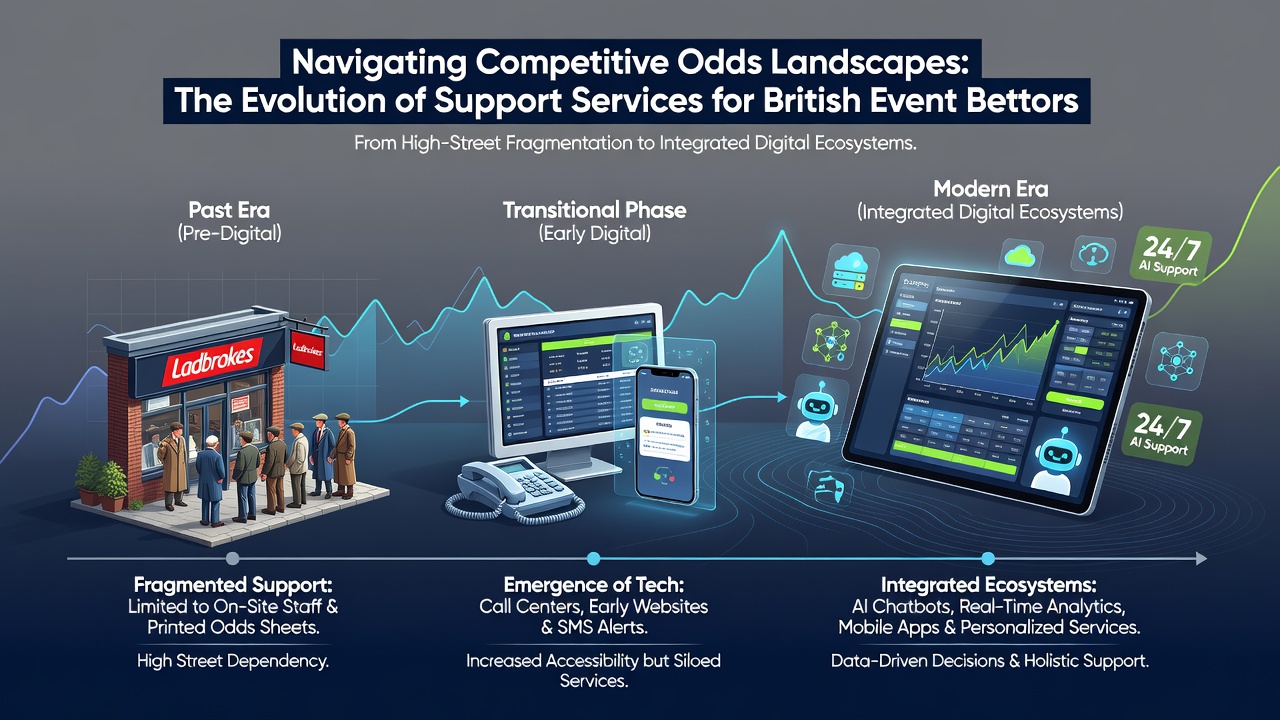
Account management dashboards now include customizable risk parameters that flag deviations from predefined exposure limits, drawing on algorithms refined through aggregated anonymized datasets. Those who have examined these systems report that color-coded visualizations help clarify position sizing relative to available liquidity, which proves useful during high-volume event periods. External partnerships with data vendors supply granular statistics on player injuries or weather impacts, information previously restricted to professional syndicates.
Regulatory Influences on Service Development
Changes in European data protection rules prompted many support providers to enhance encryption standards and obtain explicit consent protocols for data sharing. According to reports published by the National Council on Problem Gambling in the United States, comparable emphasis on user safeguards has influenced product design across multiple markets. Service operators in Britain responded by embedding self-exclusion tools directly into brokerage interfaces, allowing seamless transfer of restriction lists between affiliated platforms without manual intervention. Training modules developed in collaboration with academic institutions cover probability concepts and bankroll allocation methods, delivered through interactive modules rather than static documents.
Current Capabilities and User Patterns
Contemporary users frequently combine multiple support layers, starting with comparative odds engines before consulting algorithmic suggestions and finally executing via matched brokerage accounts. Data compiled by the European Gaming and Betting Association shows steady growth in subscription-based analytics packages that deliver weekly performance reviews tailored to specific event categories. These reviews incorporate variance calculations and suggested adjustments derived from historical outcome distributions. Support teams operating around the clock handle queries related to settlement disputes or technical integration issues, often resolving matters through shared screen sessions that demonstrate platform navigation steps.
Conclusion
The trajectory of support services for British event bettors demonstrates consistent adaptation to technological advances and shifting market structures, resulting in layered offerings that address both execution efficiency and informational needs. Continued refinement of these tools depends on ongoing collaboration between technology developers, regulatory bodies, and end users seeking reliable pathways through competitive odds environments.